
Soulicide

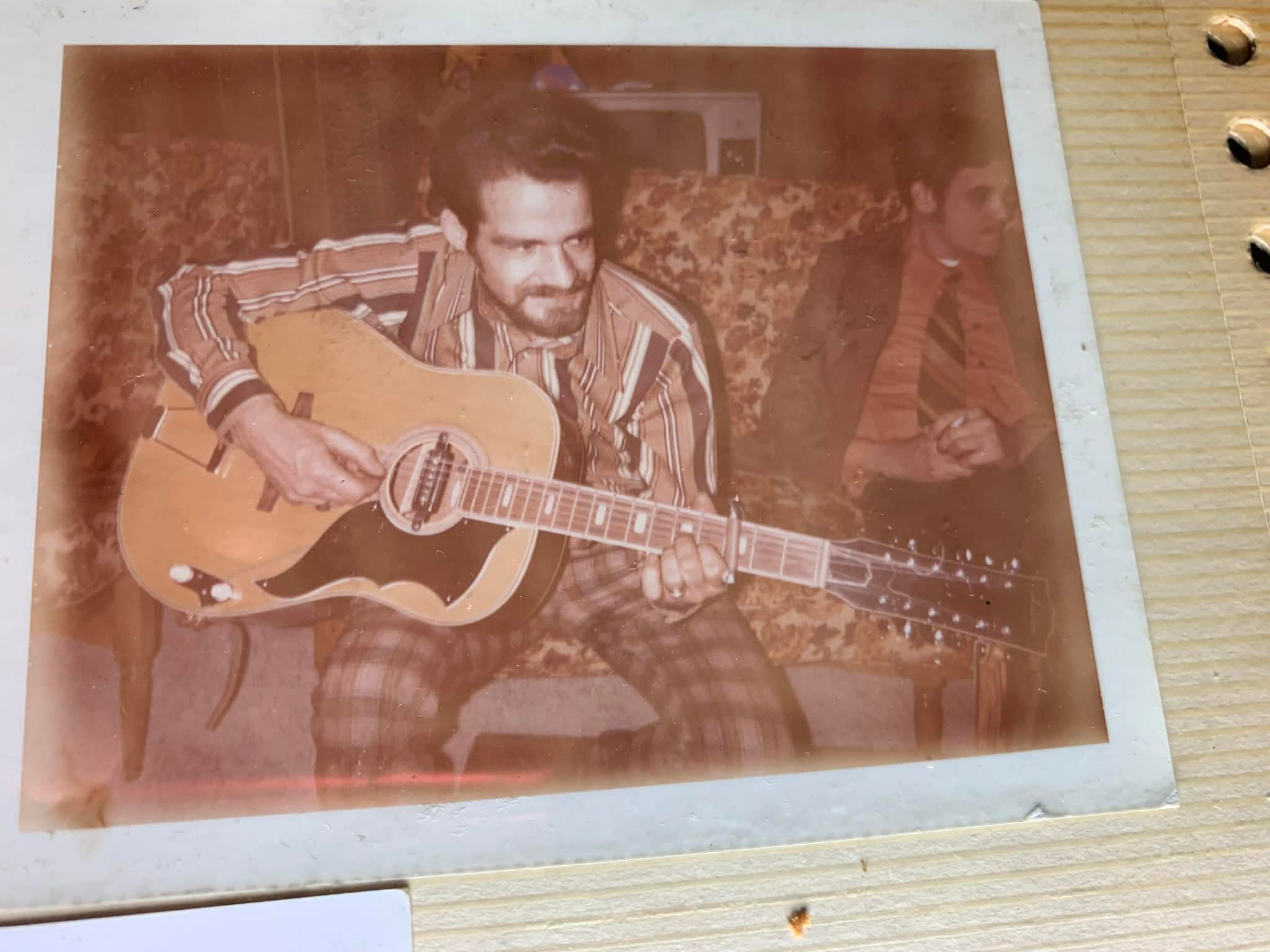
Authors Note: CAUTION. This is a straight-shooting essay that explores some of the darker aspects of the human experience, including suicide. If you are currently experiencing heaviness in life or active suicidal ideation, I recommend that you DO NOT read this essay. Please reach out to me for support if that feels aligned.
In honour of Men’s Mental Health Month, and all the good men the world loses daily.
It was summer mania on the Sea to Sky. People raced from their domesticated lives in the city to get a quick selfie in the wild, and I was caught on the highway heading in the wrong direction. I had just come from Sundance, a really powerful First Nation Ceremony and a big prayer in my life. I felt like shit. I’m pretty sure I freaked out Donovan with my nihilistic ramblings. Donovan is a Wescapios, a helper, and he tended the fire for the four days of ceremony while I was out in the arbour with the tree. This aftermath was unusual. We were camping to support our integration and just spent the day playing in waterfalls. And this dark existential angst was haunting me. Maybe it was the contrast between that reverent field of ceremony and the ordinary world. It was ferocious.
Donovan had already headed home to the Island, and I was en route. Something was off. I sat in my car on the side of the highway in a mire of confusion. Cars flew by, glinting with some liminality of that great fire in the sky. Curiosity has always been a vice; I headed back to the mountains.
The ocean tapered into the Squamish River, and I was greeted, as always, by the Stawamus Chief. From the right distance, the massive granite monolith appears as the profile of a Chief looking towards his ancestors in the sky.
Squamish holds a rich personal nostalgia of adventure and growth. I took the familiar dirt road, which was now a compacted thoroughfare. Some of my favourite swimming holes had been converted into tourist traps. The sprawl was consuming the wild. I looked up towards the North Walls of the Chief, and the heavens above, recalling the hundreds of hours of my life I’d spent exploring its nooks like a lover’s body. I knew it well, and it was still an enigma. There’s peace up there. One particular precipice came to mind. It’s a clean 400m drop, easy.... Is that it? The thing that was pulling me back here?
It wasn’t an ungrounded whim. I listened to all the variable voices in my mind, these different parts that had their own unique perspectives, pains, needs and desires. The monomind is an illusion. One part was alert, weary and rational: this can’t be the way. There was another part that held a mythic curiosity: maybe this is some type of test, like Abraham’s willingness to kill his son in service to God. A speculative part had sincere wonder… Who’s to say that suicide isn’t a karmic, fated act? There was also some kind of meta-awareness that held its ground in psychological reasoning; it sensed a young and fragile part in serious pain, back in the shadows, heavily guarded by all these other parts. The ultimate protector would have me walk up to that cliff and extinguish this pain. The thought of it now makes me cry.
There’s no shortage of reasons for despair. The world is wrought with injustice. People have second, third and fourth homes while others are homeless. Some people shit in clean water while others have none. People are dying in equal rates from starvation and obesity. Government is under corporate capture. The rich and powerful choose profit over people, and the 1% would rather colonise Mars than regenerate our planet. We’re choosing Artificial Intelligence rather than Ancestral Intelligence and killing Spirit in the name of God.
We have homicide, ecocide and infanticide. We have domicide - destruction of the home; democide - the killing of a people by a government; deicide - the killing of a God. What is this “cide” that plagues us? It means to cut, strike or kill. Perhaps there’s not enough tyranicide.
The peace I experience is built on violence, my abundance is built on slavery, and a million things die so that I can live. And all of it breaks my fucking heart.
Some say to be grateful. Some say that beauty isn’t always pretty. Some say that it’s all God. Some say that our Soul has chosen this incarnation so that the Universe can experience itself. I’m a spiritual being having a human experience. Reality Tunnels; Manifestation; Law of Attraction; Animism; Materialism; The Metacrisis; Aliens; Trump; Spirit Realm; Every Step a Prayer; Perfect, perfect, perfect... and don’t forget to pay your taxes. This place is fucking insane.
If there were no war, it would make sense. Hell, that’s too much to ask; if all the people of the world had clean water, it would make sense.
All I want to do is live in a good way and make the most of this meaningless miracle, but in this absurd creation, there’s seemingly no true way forward that can possibly compensate for the vast amount of suffering in the human condition. There is so much horror in the world that I actually feel ashamed to complain about my ordinary suffering. I am of humble means, yet still have secure shelter, the cleanest of water, fresh air, and three meals a day. Despite my privilege, I am inherently subjected to those 6 Gates of Grief.
Is the human experience really worth it? Sui-cide. The killing of one’s self.
I’m bringing it out of the shadow, so it doesn’t fester in the darkness. It’s one of those things that Western Society doesn’t like to look at, like death in general, or all those cides. Suicidal ideation is just baked into the experience. With death as an inevitable season of Life, we want to meet it in a good way, ideally surrounded by loved ones after a long and meaningful journey. In the face of needless suffering, perhaps we want to meet it sooner. There is a choice there; to de-cide: to cut away options. The dilemma is that this decision is often made without sufficient awareness.
We see various virtuous forms of ritual suicide cross-culturally and many historical examples of sacrificial martyrdom. Like Thích Quảng Đức, the flaming monk in the iconic photo. He was appalled by his Vietnamese government oppressing native Buddhism in favour of Christianity after French colonial rule. Quảng Đức recognised his Dharma: to practice immolation and set himself on fire. His final letter read: “Before closing my eyes and moving towards the vision of the Buddha, I respectfully plead to President Ngo Dinh Diem to … implement religious equality to maintain the strength of the homeland eternally.” He never moved a muscle as he burned.
Some 600 years prior, the Cathars stood their sacred ground during the Siege of Montségur. The Gnostic-dualist sect of southern France believed that the material world was the creation of an evil God, and the Soul’s purpose was to escape it. Catholicism would have none of it, and the pope ordered a crusade. The extermination culminated at the final stronghold of Montségur, where 100 Cathars held off 10,000 royal troops over 10 months. Finally, the fortress was taken. The Cathars had two options: betray their faith, or death. They actually doubled down on their piety, undergoing a ritual and sacred vow of perfecti, a level of clergy that was devoted to extreme austerity. On March 16, 1244, 220 Cathars walked gleefully into the pyre.
In both cases, the martyrs had an enduring cosmology, and in the face of a material world that was ontologically corrupt, their sacramental death was their salvation.
Go then, there are other worlds than these.
Many spiritual practices, ceremonies, and entheogenic experiences evoke awareness of reincarnation. To me, this is just an existential fact. Fully embracing reincarnation liberates the fear of death, and invokes the courage to live fully. But it also opens up a trap door: the option of exiting stage left is a real crapshoot, because who knows what karmic consequences exist in this cosmic chaos. As the Soul seeks out all possible experiences for the benefit of its evolution in the continuum of the Infinite Game, taking one’s own life could just be part of the curriculum, but it might not be
net-positive.
James Hillman, psychologist and writer, has done his part to pull suicidal imagination into the light. In his book, Suicide and the Soul, Hillman is bold in his philosophy, offering the possibility of a soul-led suicide, like Quảng Đức. However, his main argument is that in the majority of cases, the death impulse isn’t necessarily pathological; it’s the psyche’s way of signalling that transformation is needed. In North America, there are somewhere around 53,000 suicides per year, comprising roughly 75% male casualties. It’s the second leading cause of death for people between the ages of 10 and 34. With the lack of spiritual awareness, it’s highly unlikely that the suicidal decision is based on an enduring cosmology or the thought of greener grass. More likely, it’s grovelling for the terminus of existence.
That age bracket of suicides, 10-34, while somewhat vast, can be correlated with the developmental process. When dealing with suicidal ideation, the Western approach is quick to sedate and institutionalise, or maybe worse, to theologise the ordeal and defer to God: your life is not yours, and hell awaits you. Few people are willing to foray into the darkness of the psyche and be with that death impulse. Hillman, with his Jungian pedigree, would say that the responsibility is of the analyst; traditionally, this would have been the mythologist, Medicine Man, or Elder of the Village, someone with the capacity to say, “Who, or what, inside you wants to die?”
In our material-reductionist society, the predominant worldview orients literally rather than symbolically. We don’t have the myth or ontology that emphasises Entelechy: the innate intelligence of a being that compels it towards its complete realisation and final form of potential. Just like the acorn holds the entelechy of the oak tree, each human holds the potential of becoming; which represents the full evolution of this egoic iteration. In some Wisdom Traditions, that entelechy of a being might span many lifetimes, culminating in completion, realisation, or transcendence. In the cultural poverty of the West, we have lost the village-mindedness that would track people’s development and recognise crisis as a cue for an initiatory process. A Rite of Passage could allow for a suitable symbolic death, enabling evolution to endure. Without the awareness of this developmental process and appropriate support, young people are forced to suppress the death impulse, or enact it concretely. The lack of symbolic death ritual is a real threat to people’s lives.
For myself, I’ve participated in many initiatory experiences, including a 4-day Vision Quest during the writing of this essay. One piece that is missing is the Village that would hold my quest as sacred, see me off, and then welcome me home as a new man. This would provide some degree of accountability to show up to life in a more developed way. Despite my initiatory efforts, there’s still some chockstone that arrests my development and stunts my willingness to accept and face the gauntlet of life. My general disposition is that the whole fucking game is rigged and I’d simply rather not play.
There’s nothing to do but to sit with the gravitas of my psyche, this death impulse and all of its contributing factors. I track my behaviours and addictions, the seeking of pleasures that might temporarily alleviate my suffering, and highlight the moments of aliveness along the way. And I look towards others, great thinkers who have dared to stare into the abyss. It’s important to spend enough time thinking about life to know how to live, and enough time living to know how to think about life.
I used to think that I had a really sound mind; I was simpler then. If I could identify a turning point, it would be my first and only bout of activism, when I stood in defence of Old Growth forests at a place called Fairy Creek. There are fewer than 3% of these ecological pillars remaining in B.C., yet the logging industry, in corroboration with the government, insists on cutting them down. We’re taking trees older than Jesus and turning them into shingles. The God of Capitalism doesn’t care about extinction, it’s an externality that is irrelevant to the bottom line. And the people who have the sense and courage to say, this is not ok, get bullied and brutalised by government representatives.
Prior to that summer at Fairy Creek, I was oriented to a life of passion, primarily through skiing and climbing in the mountains. I had a narrow temporal horizon, a true Lost-Boy, focused on adventure, living out of a truck-camper, and making the necessary sacrifices for what really mattered. Life was ordered and sensible. In the years leading up to Fairy Creek, my hedonism became corrupted by a personal development program called Fit For Service; the reflections of others spurred something inside me... Slowly, I began to orient my life to the pursuit of meaning. It was also during this time that I was introduced to Indigenous Ceremony. With this new notion of “being of service”, I was inspired to sacrifice most of my climbing season and spend two months blockading logging roads in the woods. It was devastating.
I watched the Royal Canadian Mounted Police assault protestors who were practising peaceful civil disobedience, and they were consistently more violent with marginalised people. I finally understood the horrors of colonialism and the corruption of government. These are the same systems that have done their best to eradicate Indigenous Wisdom. In one fell swoop, I lost complete faith in the socio-political systems that we’re subjected to.
By most people’s standards, I was in my “adult” years, but still, something innocent died in that confrontation with the truth. My awareness of life was shifting from pre-tragic to tragic. I had been aware of the traumas of the world, and was finally confronted with them. In the face of these chaotic realities, I began the slow descent into nihilism. The angst has been amplifying ever since, and there’s no true prescription for existential crisis. Sometimes I just don’t know how to be in the world. Knowing what I know, I’m expected to look away? To grow up, get on with it, and go earn a living?
Francis Weller, author of The Wild Edge of Sorrow and creator of the Gates of Grief, calls “earning a living” one of the most obscene phrases in our world, as it usually equates to not living at all. We have forgotten the commons of the soul. People are reduced to an economic unit as modernity forces us to surrender passion, wonder and creativity, just to put food on the table. This is a collective, systemic wound. In the doldrums of getting by comes the byproduct of addiction to anything that might simulate a sense of aliveness or otherwise numb the pain of this particular Gate of Grief: What We Expected and Did Not Receive.
There’s a gap between what the Soul needs to flourish and what society actually provides. It’s a desecration of the Sacred, a slow attrition of meaning, spiralling downward and reciprocally narrowing until life is reduced to a subsistence existence. Conformation is Soulicide - the killing of the Soul. Artists do their best to bleed inspiration into the world, and revolutionaries search for their hill to die on. But by and by, it’s mass anaesthesia, a slow erasure of the Good, True and Beautiful. I’m lost in the confusion of “what is mine to do?” Maybe it’s all just poetic waxing.
“There is but one truly serious philosophical problem and that is suicide. Judging whether life is or is not worth living...” This is Albert Camus’ opening line in the Myth of Sisyphus. He mastered the hook before it was cool. Camus is an absurdist, suggesting that there is no cosmic significance to human life; we are simply the pitiful mayflies of the Universe. We speak our prayers and ponderings not to an intelligent system or some benevolent creator, but into a “silent world”. In the face of this terrifying truth, we fabricate falsities through thorough mental gymnastics to avoid the abyss at all costs. It’s a cold, dark, dead cosmos, and we reach for any warm blanket of a lie that might shelter us from nihilism. Religion, nationalism, capitalism, philosophy, romantic love, dharma, spirituality... Sundance... all coping mechanisms, games we play if we decide not to kill ourselves. Attributing meaning to anything is what he calls philosophical suicide. To be clear, it’s not the Universe itself that’s absurd; it’s the fact that people irrationally create all sorts of fantasies about life being meaningful. All the Gods that are and ever were, just deluded personifications of the blind forces of the Universe. It’s the gap between the meaningless and man’s search for meaning that is, in fact, absurd.
Camus eventually rules out suicide, claiming that the correct response is not to throw in the towel, but to revolt against the absurd through continued living and striving. This is where he parallels Sisyphus to the human experience. Sisyphus is a character in Greek mythology who was eternally dammed to futile labour. After cheating death and betraying Zeus, Sisyphus’s punishment was to push a giant boulder uphill, straining and struggling for every inch. And finally, as he overcomes adversity, accomplishing his great goal, and attaining the summit... the boulder rolls violently back to the bottom of the hill. Begin again. For Camus, pointlessly pushing the boulder of life up the hill is the revolt against the absurd. But isn’t he just committing his own philosophical suicide?
A critical note in Camus’ biography is that he published the Myth of Sisyphus in 1942, during WW2 and the Nazi occupation of France. Camus was face to face with the horrors of humanity; for him and his countrymen, his question of suicide wasn’t rhetorical. During the occupation, Camus was the editor for an underground resistance newspaper called Combat. This was his Sisyphean effort, fighting with his pen, not for some faith-induced eternal glory, but because that’s what a lucid human does in the face of the absurd.
My paternal grandfather, Jake, was implicated in the same war in the Netherlands, also under Nazi occupation. In 1942, he would have been 8 years old, a premature execution of the pre-tragic. At some point during the war, long before any possible contemplation of meaning, dharma or karma, he became a letter runner for the local resistance. When the Nazis found some of the letters, they forced a bunch of people into the street, violently coercing a confession. When no one spoke up, they grabbed a boy at random and shot him dead, right in front of Jake.
40 years later, Jake committed suicide; two weeks before my dad’s birthday, one month before I was born.
Since staring up at that cliff post Sundance, I have continued to question life. There was a particularly dense season during the short, dark and wet days characteristic of the Pacific Northwest. I was living in a mouldy yurt, and trying to integrate into a community where I didn’t belong. And there was a woman who I loved, but my wounds and doubts prevented me from committing. It wasn’t a war zone, but those first-world problems still broke my heart.
In the fall, I found my way to a Grief Retreat for the second time. I saw the value of these containers, an opportunity for people to be real and commiserate around those Gates of Grief; it creates some breathing room from the demons that we carry. The space is intense and courageous in the willingness to feel. It stirs the Soul.
The retreats culminate around a ritual from the Dagara people of West Africa, brought to the Western world by Malidoma Somé. Somé was a writer and initiated Elder whose life’s work was to share the Indigenous Wisdom of his people. The Dagara people have an intact culture and cosmology, rich with ritual. In their worldview, it is essential that grief be discharged or the individual becomes cut off from the current of existence, which impacts the entire village; it would be considered a disservice to keep your grief to yourself. By sharing the burden of being alive, the less heavy it becomes. The Dagara practised grief rituals weekly.
The Dagara cosmology suggests that a person chooses their daat, their life purpose, before they are born; it is spoken through the Elders of the village and then confirmed at their initiation. The Elders observe the child in development, and any episode that might be pathologised in the West as anxiety, depression or suicidal ideation would be recognised as “the presence of the spirit world pressing in”; a call to the initiatory process.
Somé was taken from his village at the age of 4 by a French Jesuit missionary and cut off from his culture for 15 years. The ethnocide he was subjected to resulted in Soul Loss. When he finally returned to his people, the corrective initiation that ensued almost killed him. This Soul Loss is Somé’s chronic diagnosis of the West. He claims that this degree of psychological distress, depression, anxiety, pain and existential angst that is present in modern society is the appropriate response to a broken cultural container. The absence of initiation, elder relationships, grief ritual and cosmological belonging is what siphons our aliveness.
I often feel like a lost settler, grasping for tatters of culture. My family tree has roots in the Netherlands and Scotland, but I have no idea how my ancestors lived. Where I have found some meaning and orientation is from the local First Nations. Over the past half-decade, I’ve learnt about ritual, ceremony and the interconnection of all things in this great Web of Life. This isn’t philosophical suicide; it’s materially grounded. I’ve learnt about taking care of the fire, and all those sacred elements; it’s the duty of a mature and lucid people to protect these things, just like those ancient trees. This isn’t my culture, but it resonates with something deep inside me, and Earth Wisdom is transcultural.
My ancestors would have practised the Earth Wisdom of the Celts; even the Netherlands would have been influenced by this worldview. Over the past several years, my friend group, the Enliven Festival Collective, has been hosting events based on the Celtic Wheel of the Year. 3 months after Sundance, I found myself at a Samhain gathering, when I started to connect the dots.
Samhain arrives around the same time as Halloween and the Day of the Dead, as a liminal or threshold festival that honours the change of seasons. Bonfires are lit for their protective and cleansing powers while livestock is brought out of the summer pastures and slaughtered. The boundary with the Spirit World thins, and we honour the ancestors with offerings, food, and drink, inviting them to feast with us. We ask for support, praying that the livestock and people can survive the winter. Sometimes costumes are worn to scare off malevolent energies, and divination is often part of the process.
For the Ancestors Feast, we were encouraged to make a traditional dish from our heritage. I killed a rabbit that was farmed on the land where I was living and prepared it into a stew. When dinner time arrived, we took a small piece from each dish and formed a Spirit Plate to feed the ancestors. I happened to arrive at the table where the Spirit Plate was placed, with an open seat in front of it, so that the ancestors could join us.
There were 6 of us at this particular table, and we decided to run an experiment. Each person took a turn inviting an ancestor to sit with us, and their respective relative would ask a question. The answer was then sourced from the other people at the table as we surrendered our minds and allowed the transmission to come through. It was like a Gestalt-Family Constellations mashup.
The rest of the gathering feasted and celebrated, unaware of what was happening in our little coven; we opened a portal, a casual dinner divination. The energy was loamy, simultaneously spacious and heavy. I can’t speak to the impact on the others, but at the very least, we got to hear each other’s storied ancestries. I invited Grandpa Jake, the tragic man I’d never met, to sit with us.
I’m tempted to confabulate a poetic transmission that emerged during the Q&A, but truthfully, I don’t even know what I asked. What I do remember is a compression of my chest and rolling energy that moved up my back and over my shoulders... I was struck with realisation. This weight I had been feeling, this death impulse, wasn’t entirely mine: the Gate of Ancestral Grief. I had been carrying the burden of my dead grandfather.
Recently I discovered the moody genius of philosopher Emil Cioran. He agreed with Camus that existence was utterly absurd, but took a more passive and grim approach. He was a philosophical pessimist. For Cioran, it was important to sit in the darkness of the human condition. “Who is more unhappy?”, he would ask, “He who feels his own loneliness or he who feels the loneliness of the world?” His work provides some perverse sense of belonging.
Cioran wasn’t willing to justify away melancholy and dread, but recognised them as the cost of admission for this great abomination. He sides with Gnostic cosmology, such as that of the Cathars, viewing the material world as a trap created by a lesser God that has imprisoned our divine spark. He goes on to say that if God is omnipotent, humanity is a spectacular failure, like a phantasmagoric art project gone sideways. He spins it, though, saying that with a baseline of failure, we are empowered to fail freely and be equanimous in the face of it all. A failure is way more interesting than a person who’s found success, because he’s truly met himself in the process; his life becomes some sort of abstract artwork that he gets to explain. Cioran was beyond societal expectations, saying, “The big success of my life is that I’ve managed to live without having a job... I preferred to live like a parasite rather than to destroy myself.”
For all his tough talk, Cioran did have an aesthetic sensitivity, writing beautifully. His muse was his salvation, saying that writing a book was “suicide postponed.” In his book, On the Heights of Despair, he writes, “I live because the mountains do not laugh and the worms do not sing.” Cioran grounds his stance in a cold, dead universe, but he ultimately betrays himself through his celebration of expression. Laughing and singing are simple profundities of being human, purposeful in themselves; just like dancing, playing, creating art and all other wildly courageous expressions of the Soul.
Hillman gets down with this. He points out that the person most drawn to suicide is often someone who is not fully living. Fully living means being fully expressed, pursuing our Dharma, and creating the life we desire. The self-diagnosis of my death impulse is that I’m falling short in all these departments: I’m losing at the game of life. But how am I supposed to orient in a world that’s lost its mind? I have no guidance, I have no Elders, I have no Village to reflect my gifts, and nobody has a complete map of the territory. It’s just a bunch of broken lighthouses leaving everyone shipwrecked. My biology tells me to find a partner and start a family. Society tells me to commit Soulicide, be a wage slave and get on with it. My Lost Boy says to go play in the mountains. My seeker says to drink the medicine and meet the Creator. My defeatist says become a monk and sit in a cave. My animist says go to the forest and discover the name of the wind. And virtuosity says to feed people and be of service, get out there and save the world, like a hummingbird with a beaker of water in a forest fire. The gospel speaks: “If you bring forth what is within you, what you bring forth will save you.”
WHAT DO YOU WANT FROM ME!?! Camus laughs.
Something needs to change for me to get off of this perpetual fence. There’s a reluctance to de-cide, to cut away options and face the opportunity cost of killing off other timelines of adventure. Another Gate, The Grief of Thresholds; to allow parts of ourselves to die in order to become. Being a man means to pick a boulder and start pushing. The reluctance to choose is in fear of picking the wrong thing, but there’s something else going on with this arrested development. What if I fail and I’m destined for this life of purgatory? What if I’m punished for my courage?
The gospel cautions: “If you do not bring forth what is within you, what you do not bring forth will destroy you.”
I am the product of a mountain town love affair. Poetically apt, given my love for the mountains. My Dad was visiting from out of the country, and ultimately my parents decided they couldn’t merge their worlds for me. My 21-year-old mother raised me on her own. Kudos to all those who helped, but it sure as hell wasn’t a village. My dad’s absence signalled rejection, ingraining the devastating message: I’m not good enough. I came into the world like all Souls, beaming with love and wonder. My mom was young and overwhelmed, and she did a hell of a job, but some aspects of my expression went unrequited. The preordained Gate, The Places That Have Not Known Love. With that initial homecoming, I’ve walked cautiously through the world, stifling expression, uncertain about how I might be received.
This is the insidious shadow that stunts my development; it’s the wound that prevents me from committing; it’s the force that sabotages this very piece of writing, begging me with tears not to release it into the world. It’s the little boy inside me, lost, afraid and desperate for love, terrified to expose himself and risk confirmation that he is, in fact, not good enough. Many parts of my psyche stand on guard, willing to die rather than have that little boy relive that pain. I sit with compassion for this young one, gently coaxing his courage, waiting for him to bare the longing of his heart on the great stage of life.
The threshold I’m facing isn’t just mine. My grandfather found courage at an early age as his boulder was thrust upon him. He was punished for his revolt against the world and then shipped away from home when he was 17. The psychological damage was immense, and he didn’t have the cosmology, rituals or Elders to recover from his Soul Loss. He was tormented by his pain and paid for it with his life. Jake sits on my shoulder, begging for self-preservation. It became clear to me that any chance of personal and ancestral healing would require me to speak to my father, the man I haven’t seen in over 20 years.
The last time I saw my Dad was when I spent 10 months in Australia after high school. I knew everything there was to know about life and mostly smoked weed, drank, and played video games while my Dad tried to relate with me. The whole thing was fine, but it was not connected. What happened when I came back to Canada, with no awareness or conscious intention, is that I slowly cut my Dad out of my life. The abandoned, abandon. I even stopped playing the guitar he got me. For 17 years I walked away from music, an expression of my Soul, because I unknowingly associated it with my absent father.
Over 20 years had gone by with fewer phone calls than I have fingers. How the hell was I going to tell him that his dead dad was fucking with my life? I had no idea about his ontology, cosmology or general worldview. 5 months went by before I got the mustard to initiate a call. He told me he was deaf and had to wait for hearing aids. 1 month went by. I forewarned him; I want to talk about Grandpa Jake.
So we arrived, progeny and progenitor, face to screen to face. There was my dad, the man who conspired with the universe to make me, some miraculous bastard. We circled around life, all the small stuff, and finally I said, “I think you told me that your dad committed suicide, is that right?” My dad seemed at peace with it, composed in his remembering. I asked why he did it; this is what I’ve pieced together.
Jake was aged 5-11 during the war in the Netherlands. He was running letters for the resistance for some unknown period of time, which likely ended with the shooting. When he was 17, he got a married woman pregnant, and his parents shipped him off to Canada, with one of his five siblings. He married his wife Rita and had two boys in his early twenties.
Jake was unfaithful for most of his marriage, deceitful and careless with money. At one point, he disappeared with a married woman for 2 weeks. Rita took him back, but was spiteful and incessantly belittling. Seeking support from the Church, they ended up forming a folk band that toured around, performing at masses. It was the 60’s and 70’s, after all. The boys, then young teenagers, along with some other girls, rounded out the band. It was called Generation Bridge.
In 1972, the family moved to Australia and quickly reformed the church band. My Dad turned 15, and his hormones told him to quit. Uncle Mark followed quickly after, and Jake and Rita soon gave up on Church. Without the faith of a wrathful God, Jake was back to his old ways. His boyhood wound haunted him: long bouts of unemployment, womanising, stealing, drinking… lots of drinking. Cioran would have loved him.
Jake took up woodworking as a hobby, heading out to the garage early in the morning with a coffee full of whiskey. He never found a way to make any money from it; he just gave it away. He liked to entertain people with his music, and I imagine him being charismatic, maybe a bit of a Lost Boy, trying to navigate the suffering of a broken world. The war had robbed Jake of his audacity; he failed to metabolise trauma and connect with aliveness, never fully arriving in the post-tragic phase of development. He chose peace over pain, and death over life. On November 2, 1983, he was found in the garage, saturated with carbon monoxide. I was born on December 6th. After his death, many people called to collect outstanding debt. Rita told them to fuck off.
I took in the family history, and then told my Dad the truth. It had been a really hard 6 months, and I had been dealing with a lot of suicidal ideation. I mentioned my Spiritual beliefs around ancestral trauma, that we’re impacted by the 7 generations before, just like we influence the 7 generations to come. I told him that I had inherited his Dad’s pain. There was a pause, and a breath... he took it all in stride. He even shared about his time with the Aboriginals and how they had a similar cosmology related to their ancestors. I lit some sage and spoke directly to Jake, acknowledging his pain, offering him peace, and instructing him not to burden me. I was shy in my séance, not sure how my expression would land with my Dad.
At one point, my Dad said, sad but cool, “I don’t want you to kill yourself.” We cried together for the first time, staring at this stupid screen. We chatted for a while longer until it was time to carry on. “I don’t want you to go”, he said. I closed the computer and went straight to my bed, convulsing with sobs.
Life might be easier if I were complacent. If I could just conform to a full-time job, 40 hours a week, 50 weeks of the year, doing what I’m told. Maybe I’d feel stable. This model seems to work for a lot of people; they’re satisfied, or otherwise well sedated into some bleak contentment. They feign happiness as though it’s a high watermark, but the stats tell a story of some underlying hollowness. Even in our North American privilege, those with all the success and comforts they desire are killing themselves. It’s a crisis of meaning. There’s a longing for something of substance - Connection, Expression, Belonging, Meaning, Aliveness - all virtues obscured in an anaesthetised people. I heard Francis Weller once describe the most joyous woman he ever met. She was of an African culture, and her vitality was overwhelming, permeating the world around her. When he asked her what her secret was, she answered, “I cry a lot.”
My Spirit lightened with the Spring bloom, the natural cycle of things. Likely the call with my Dad had something to do with it. I found my way to another Grief Retreat, this one led by a true Elder and song carrier, Laurence Cole. Laurence has been in the world of Grief Rituals for 30 years and has studied directly with Malidoma Somé and Francis Weller. It was the most intense grief container that I had been in.
It’s perhaps a counterintuitive thing to seek out a place to be in misery. The merit of the ritual space is containment; it’s a designated space to face the darkness, a place to cry a lot. These cathartic purges prevent that energy from leaking into our daily life. Some people say that plant medicine can be like years of therapy in one weekend; a grief retreat can do something similar. The relational connections that are formed in that intimate space are truly remarkable, a momentary experience of the village mind and heart. Though much like a psychedelic experience, it’s not guaranteed to be net positive. Some wounds can be resurfaced, suppressed memories and truths can arise, and the pain can be unbearable. The container is strong, and it’s intentionally unsafe.
Midday on Saturday, with a group of mostly strangers, we dove into the depths of the 6 Gates of Grief. Laurence and his supporter took turns describing each gate. In teams of two, we alternated, nonverbally expressing our feelings through embodied movement and sound.
It started gently with groans and tears, building into sobs and shudders. There were childlike wails, sullen prayer positions, prostrations, clutching and grasping for any type of reason. Roars of fury and pain culminated in collapse. With each Gate spoken, I dissociated a little more, pulling my hood over my head, and shrinking to a fetal position on the floor. Finally, that ultimate Gate, the cruel bitch of impermanence: We Will Lose Everything that We Love. A cacophonous crescendo, shrieks of decimated hearts. The room trembled.
Weller speaks about the feralness of grief, something that we must accept as the cost of love. Somé might remind us that the grief is not ours, but the Village’s. Hillman would encourage us to die so that we can become. Camus would tell us we must imagine Sisyphus happy, pushing his boulder up the hill. And Cioran said, “Without the idea of suicide, I would have surely killed myself.”
If you would have told me any of that after the Gates of Grief exercise, I would have slapped you. We self-organised into groups of 3 and took turns revealing our inner worlds while the others practised compassionate witnessing. I was still shaking from that group meltdown. When my turn arrived, I touted my nihilistic pessimism. This whole thing is a crock of shit. We weren’t prepared for that exercise, the container wasn’t held well, and we’re doing more harm than good. And that wasn’t even the main event! At least the ritual has some fucking music. I ranted about the absurd, spouting about how Camus is a pussy because he actually rules out suicide. I lamented in despair and said every possible word to imply that it would make more sense to just…
I was interrupted by a bee. It landed gracefully on my bare-skinned belly. I tried to spit out a couple more obscenities and simply couldn’t. Nature had captured me. I marvelled at the sophistication of evolution, a creature whose lineage dates back 100 million years. I admired the striations of black and gold, its translucent propulsion system, its pollen-dusted legs that feed its kin and inadvertently perpetuate all of life. Its knowing eyes. The other two humans were right there with me. My face contorted as my psyche battled itself: this is completely insignificant. I tried to barricade my fragile heart against the magnificence of life, and this minute miracle broke me. My relative rested on my stomach for a short eternity until my convulsing sobs scared it off. It flew away with the breeze.
I started to sing.
Kyle Dow is an Existential Guide, sitting with others in the chaos, and celebrating them in the light. His work focuses on Connection, Expression, Belonging, Meaning and Aliveness. He also offers End of Life support and rituals for all of life’s beginnings and endings. He’s happy you’re here.
kyledow.com
@kyle_dow
Dearest Kyle! Your soulful piece of writing brought tears to my eyes as it brought back memories of my late husband's own suicide which happened 29 years ago. I was 26 and my daughter and son where 6 and 4. Both my children experienced suicidal ideation in their own unique way.
If you are ever interested, as an "elder-in-training", a title bestowed to me by Fern during Ways of the Wild, I am willing to share my story and wisdom garnered from that experience. Reach out to me anytime.
So many of your quotes come from men and I know you are trying to understand the experience of men, so please forgive if this is not relevant. One thing I always wondered about great philosophers and thinkers is how did they eat dinner? Did they grow it, cook it? How did they have time to think so much and reflect on the meaning of life? After giving birth, my babies were full time jobs. I remember both the blissfulness of being in the moment and also my awareness that I had temporarily lost my capacities to think or reflect because I had no time for that. The meaning of life was pretty clear in those moments though: Feed the babies! One of my Elders said that after the Residential Schools her observation was that the men's spirits had been more broken. Women had their babies and they talked more with each other. My 26 year old son currently sounds a lot like you. He thinks the system is rigged. He is doomed to 40 hours a week and a life of drudgery. He goes tree planting and life makes sense for a while. But he recently said he is suicidal because he doesn't want to join the rat race and sees no way around it.
He says he is not actively considering it, but he likes having suicide as a choice. His dad made that choice. He had no peace when he was using and no peace when he was trying to get clean - because of memories. He was tired. After me trying to keep him in this world in so many ways, I finally let go and respected his capacity to choose. For me, life in service, and creativity, are the only ways I can make sense of things. I have a sensitive friend who is relentlessly in full grief for what is happening in the world. This makes him somewhat hard to be around because he can't see what's in front of him. Maybe a beautiful butterfly. I appreciate all your efforts to connect, to integrate, communicate and share your experience. I hope my son can one day make it to some of the men's workshops you write about. I hope he finds his way.